Yesterday, the biggest Cyberattack occurred on Twitter. Many high-profile Twitter accounts of Americans have been hacked. This includes American Former Vice President Joe Biden, Tesla CEO Elon Musk, Microsoft founder Bill Gates and many other important accounts of Apple.
After Twitter Handle Hack, these accounts posted a special message. A link was posted on these accounts and asked for Bitcoins cryptocurrency. Hacking Twitter’s handle claimed that people would be returned double bitcoins if these high profile people give one dollar.
Twitter’s many accounts of the world’s largest businessmen and leaders, including billionaire businessmen Elon Musk, Warren Buffett, Jeff Bezos, and Bill Gates have been hacked.
Actually, this kind of hacking is a Bitcoin scam, understand how!
Posts created by hacked accounts demanded payment in Bitcoin and claimed to be doubled. Bill Gates’ tweet said: “Everyone asked me to give back, so you sent me a thousand dollars, I Will send you two thousand dollars”.
A tweet posted by Tesla CEO Elon Musk’s account also said that the money sent in Bitcoin will double and be returned within the next hour. The link with the anonymous address of bitcoin address posted a Tweet “Due to the COVID pandemic, I am donating”. These tweets were removed within a few minutes of posting.
In addition to the famous American rapper Kanye West, model and actress Kim Kardashian, former President Barack Obama, and Democratic presidential candidate Joe Biden, Uber and Apple’s accounts in the world’s largest companies have also hacked.
Billionaires Jeff Bezos Bill Gates and Elon Musk are well-known American figures who targeted in Bitcoin scam on Twitter yesterday.
The official accounts of Barack Obama, Kanye West, and Joe Biden also demand donations in cryptocurrency, Bitcoin.
What is Bitcoin?
Bitcoin has two main characteristics: it is digital and is considered an alternative currency. Unlike paper currency or coins in your pocket, it exists largely online. Although some professional and specialist ATMs issue bitcoins, it is best to treat them as virtual tokens.
Second, Bitcoin is not printed by the government or traditional banks. Dr. Garrick Hileman of the Judge Business School at Cambridge University stated that this means “this is not legal tender and you cannot pay taxes or use it to pay off debts”.
Bitcoin is formed by a complex process known as “mining”, which is then monitored by computer networks throughout the world.
There are about 5,600 new bitcoins every day, and there are now about 16.5 million bitcoins in circulation. However, like all currencies, its value depends on how much currency people are willing to buy and sell.
Emergency response
Earlier, Twitter had to take extraordinary steps to prevent all verified accounts marked with blue ticks from tweeting. The password reset request was also rejected, and some other “account functions” were also disabled.
Twitter said it was a “coordination” attack against its employees, “having access to internal systems and tools. We know that hackers use this access to control many highly-known users, including verified accounts and Tweets on their behalf”, said in a series of tweets yesterday.
Hacked Account of verified users also includes celebrities, Businessmen, Journalists, and news agencies as well as government, politicians, heads of state, and emergency services.
It further appended that during the company’s investigation, “important steps” have been taken to restrict access to such internal systems and tools.
While working from home, Mukesh Ambani was able to raise about $28 billion with which he wants to step into the breach of technology war between America and China. He plans to rule the market with digital products like 5-G technologies, JioMart with Whatsapp, and availability of affordable 4G phones that can challenge the power of companies such as Xiaomi, Tencent. The two Silicon Valley giants – Google and Facebook gave him the money to help him put there. It is a bold step.
Politicians of many nations including the U.K, the U.S., and India, are reluctant to let Huawei Technologies become the fast-speed network as they have been accused as a Chinese instrument.
Ambani announced the launch of 5G technology built by his four-years-old Jio platform would soon be hitting the market, at his Annual General Meeting on Wednesday. He will offer it to other countries after testing it on 400 million 4G customers in India. Ambani called this technology as a “Huawei Killer.” The U.S. secretary also appreciates Jio as a clean network for not using Chinese firm gears. Such statements coming from different countries can be seen as their hatred towards China due to the spread of coronavirus.
While the details of Ambani’s 5G is still fuzzy, the planned assault against handsets makers is clearer. Sundar Pichai, CEO of Alphabet and Google, pledged to invest $4.5 billion for a 7.7% stake in Jio and helps to build an Andriod operating system, at the Reliance Virtual Annual Meeting. They have also decided to provide cheap smartphones to about 350 million people who are still using feature phones to access mobile internet. But if we think about it, these phones will have only Jio in-built apps – with the affordability of a cheap rate. Will Google be comfortable with this customization? In all these extreme, there is a big threat to Xiaomi Corp.
The deal between Facebook and Jio, where Facebook has given Jio $5.7 billion for a 10% stake. Whatsapp, which is owned by Facebook, able to handle a real-time payment system which makes it a perfect platform for Jio to create an app like Tencent Technologies Ltd. WeChat, connecting app with customers.
Just as Ambani wants to overcome the Chinese firms, similarly India’s policymakers want the same thing but with the broader perspective of the economy. Making India the world’s factory, leaving China and West behind. But India is not ready for it yet, neither in the way of infrastructure nor in the form of Indian companies balance sheet. Right now, the economy is dealing with the health crisis. After the pandemic, everything from broken financial sectors to the economy and health to social security is needed to be regained.
Reliance is helping India to move forward in different ways such as:
It will willing to run Prime Minister Narender Modi’s buy-Indian agenda.
Its grocery business will lift the farmer’s income through direct purchasing.
The cheap cloud services offered by Jio will help small businesses to digitize
With the help of JioMart, the small kiranas shops could outgrow their limited space.
JioMeet app could become a virtual classroom set up for the country
It can also help supply cleaner auto fuels by taking a step to end India’s pollution problem.
As India has learned many things from China, one is that the economic policy that aligns itself with the expansion of few large capitalists is more manageable and produces faster results than one that has to play referee to free and open competition.
India accounts for almost 35% of the Chinese vendor’s smartphone shipment. If Ambani will able to take on China’s mobile company in India. It will be another indirect attack on China after the ban of 59 Chinese apps
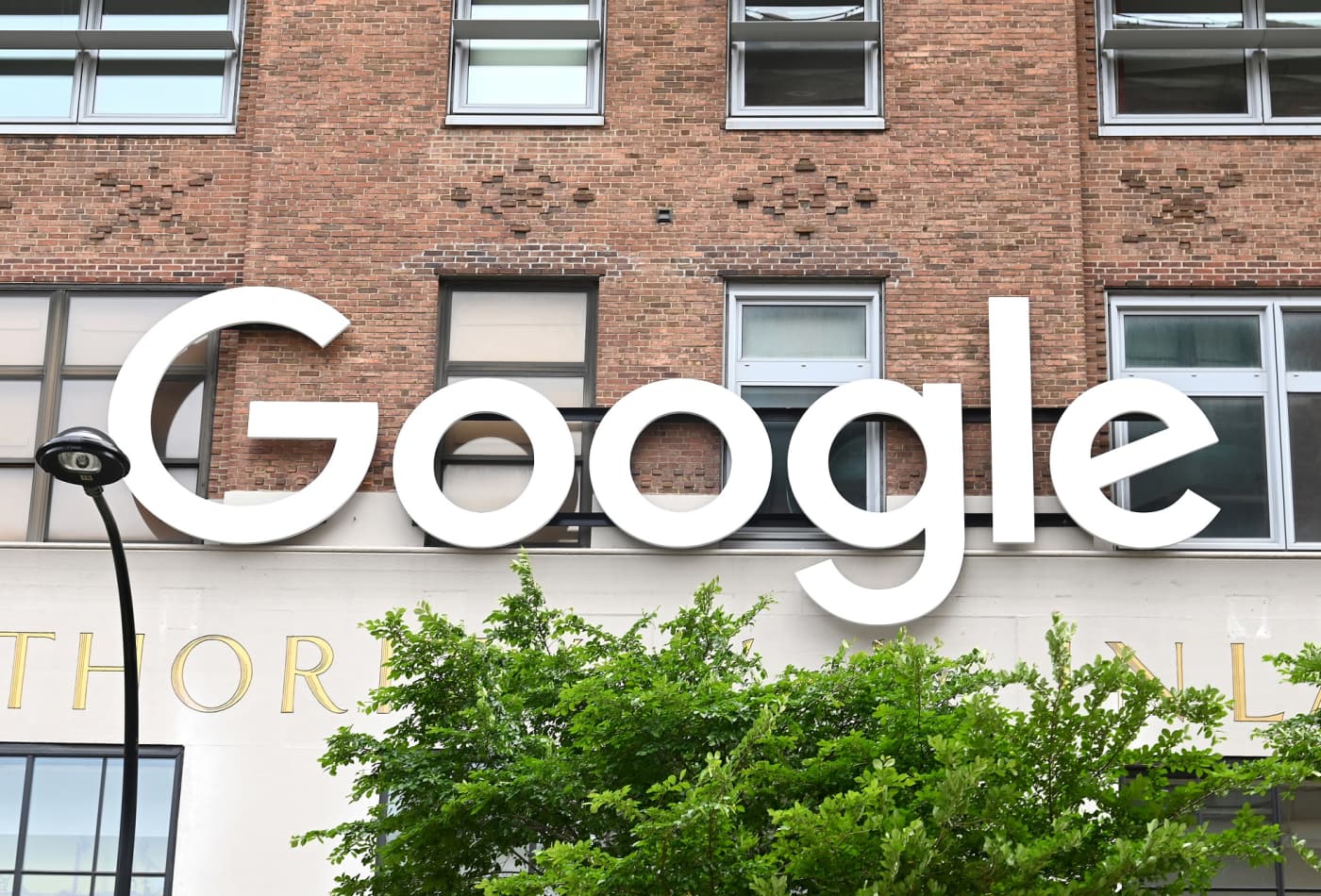
The Google logo outside if its New York City offices, which were closed on May 19, 2020 due to the coronavirus pandemic.
Ben Gabbe/Getty Images
Today, Google announced three new online certificate programs in data analytics, project management and user experience design.
The certificates are created and taught by Google employees, do not require a college degree, can be completed in three to six months and are offered through the online learning platform Coursera. Google says it will consider all of its certificates as the equivalent of a four-year college degree for related roles at the company.
“This is not revenue-generating for Google,” says Google vice president,Lisa Gevelber, who leads Grow with Google and Google for Startups and serves as the company’s Americas chief marketing officer. “There’s a small cost from the Coursera platform itself — the current pricing is $49 a month — but we want to ensure that anyone who wants to have this opportunity, can have it.”
The tech giant has committed to funding 100,000 need-based scholarships for individuals enrolled in any of these career certificate programs and will be awarding over $10 million in grants to YWCA, NPower and JFF — three nonprofits that partner with Google to provide workforce development to women, veterans and underrepresented Americans.
Gevelber says Google chose the specific fields of data analytics, project management and user experience because they can lead to “high-growth, high-paying careers.”
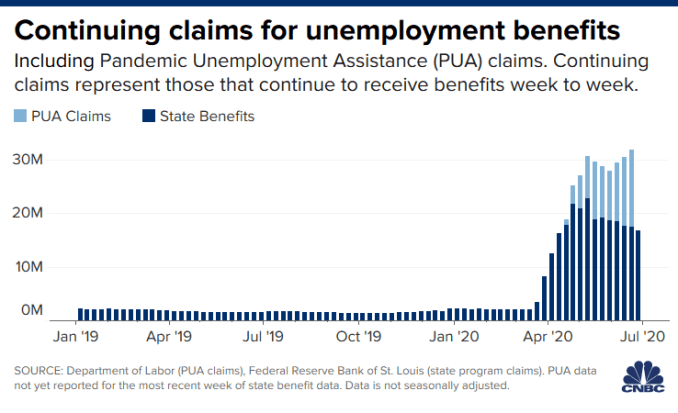
Google’s announcement comes as the United States grapples with historically high unemployment levels. According to most recent data from the U.S. Labor Department, 33 million people were collecting unemployment benefits as of June 20 — five times the previous high of 6.6 million hit during the Great Recession.
And while some of these jobs may return over time, the coronavirus pandemic has heightened fears that some jobs may not return for a variety of reasons, including cost-cutting measures, closing of businesses and also automation.
Coronavirus “has caused an acceleration of some labor trends like automation,” Karen Fichuk, CEO of Randstad North America told CNBC Make It in April, adding that out-of-work Americans may need to develop new skills in order to find new jobs. “What we’re seeing is this significant need for massive up-skilling and retraining, especially for workers who have been laid off.”
Some believe that low-cost certificate programs may be a possible solution, as well as a tool to combat historic inequality in fields such as tech and improve prob prospects forthose who do not have a college degree.
“While college degrees have tons of value, they are not accessible to everyone,” says Gevelber. “And we believe that the absence of a college degree should not be a barrier to economic stability.”
In 2018, Google launched a similar certificate program for those interested in IT.
“When we first built the IT certificate, we built it for our own use,” says Gevelber. “We wanted to diversify our own workforce and we knew to do that we needed to create an on-ramp for underrepresented and ‘nontraditional applicants.’ We thought a certificate would be a way to accomplish that goal, and it did.”
Google says that 58% of those who take its IT certificate identify as Black, Latino, female or as a veteran and that 45% of enrollees make less than $30,000 per year.The company claims that 80% of participants say the program helped them advance their job search or career within six months, including getting a raise, finding a new job or starting a new business.
Yves Cooper took Google’s IT certificate in 2018 through a workforce-development program run by the nonprofit Merit America. Cooper had dropped out of Coppin State University and was working as a van driver for adults with developmental disabilities. Today, Cooper works as an IT help desk technician for Prosperity Now, a D.C. nonprofit and is earning “much more.”
He says the Merit America program offered in-person support, encouraged his class of six students to complete the certificate in 10 weeks and that he and three others graduated from the program.
Before the program, Cooper says he did not hear back from any organizations he applied to. “A couple of days after I finished the Google certification, I applied to the job I currently have now and they got back to me maybe four or five days later,” he says.
Jeff Maggioncalda, CEO of Coursera, says more than 250,000 people have taken Google’s IT certificate, 57% of whom do not have a college degree, making it the platform’s most popular certificate. He suspects the new certificates will be similarly popular — especially in light of recent events.
Maggioncalda says the coronavirus pandemic has created “unprecedented demand” for online courses.
“There’s a course from Yale on the science of wellbeing that saw 2 million enrollments just in 2020 alone,” he says. “We have a course that was launched in May from John Hopkins called ‘COVID Contact Tracing.’ Within four weeks, it had 400,000 enrollments.”
Some are skeptical of the grand promises of online learning and certificate programs.
Todd Rose, a professor at the Harvard Graduate School of Education, argues that learning online is significantly easier for students that have strong academic backgrounds, reliable internet connections and sufficient technology.
“The students that will do well online are people who are already prepared. You have to be pretty self-directed,” he says, noting that in-person support for students learning online can help close these gaps. “Poor students and first-generation students often don’t do as well online.”
But Maggioncalda is bullish about the opportunity that online learning may provide. He says because the coronavirus pandemic has forced students to embrace online learning, and forced companies to embrace remote working, he is more optimistic than ever that certificates like Google’s will be used as tools to increase opportunity.
“The college degree requirement excludes lots of people who could do the job if only they had a different way of getting the skills. Online learning is a necessary, but not sufficient, ingredient to creating more social equity,” he says. “Our ‘new normal’ where I can get skilled to do a job without leaving my community, and I can get the job and do the job and get paid for doing the job without leaving my community, I believe that this will create more economic opportunity than anything we’ve seen before.”
Did you know that there was a bus that used to run in the 1960s from Kolkata ( then Calcutta) in India to London in England? The double-decker bus was known as Albert and the trips covered by it were called Albert tours. Interestingly, this was the world’s longest bus route and one side travel between London and Kolkata on it would cost £145 ( around ₹13518), which was undoubtedly a whopping amount in those days. Rare pictures of the historical bus are now doing rounds on social media and the netizens are loving them.
The World’s Longest Bus Route From London To Kolkata
According to a report by Central Western Daily, Andy Stewart, a British traveller had bought the bus in 1968 to travel from Sydney to London via India. On October 8, 1968, he had started from Martin Place, Sydney with 13 co-passengers to cover the journey of nearly 16,000 kilometres. He arrived in London after 132 days, on February 17, 1969. The bus used to travel from England to Sydney via Belgium, West Germany, Austria, Yugoslavia, Bulgaria, Turkey, Iran, Afghanistan, West Pakistan, India, Burma, Thailand, Malaya and Singapore. In India, Albert covered Delhi, Agra, Allahabad, Benaras and finally Kolkata.
A year-round time table was created from the operation of Albert across Kolkata, London and Sydney. As per reports, the trips numbered 4, 5, 6, 7, 8 and 9, ran right to Sydney. The trips with numbers 12 to 15 ran between London and Kolkata.
Picture Credits: Twitter
Albert Tours Were Profoundly Luxurious
While taking a journey on the Albert bus, one could enjoy luxury at its zenith. The lower deck of the bus had a reading and dining lounge and the upper deck had a forward observation lounge. Also, there was a fully equipped kitchen with all the amenities. For parties, there were arrangements of radio and taped music.
Picture Credits: Reddit
Fan heaters inside the bus helped to keep the travellers warm. Apart from these, the interiors had bright curtains and carpets with individual sleeping bunks. With all these luxury arrangements, Albert was aptly like a ‘home away from home’.
While making its way from England to Sydney, Albert passed by breathtaking tourist destinations like the Golden Horn of Istanbul, the Peacock Throne of Delhi, the Taj Mahal of Agra, the Benaras on the Ganges, the Caspian Sea coast, the Blue Danube, the Draconian Pass, the Rhine Valley, the Kyber Pass and Kabul Gorge. Additionally, the package included free shopping days in places like New Delhi, Kabul, Istanbul, Tehran, Vienna, Salzburg and many more. Meanwhile, meet this Kolkata engineer who had left his corporate job to travel for a year.
Albert had completed about 15 tours between Kolkata and England and four trips between England and Australia until 1976. It had crossed nearly 150 borders without many scrutinies and had earned the tag of a ‘friendly ambassador’ in all the nations it traversed. There are oodles of intriguing stories hidden in the pages of history. Unveiling them one after another will leave us spellbound.
The Securities Industry Essentials Exam (SIE) is a new test. It just became available on October 1st, 2018. The Financial Industry Regulatory Authority (FINRA) reorganized the initial securities exams in what I believe to be a smart improvement. Before the reorganization, the typical path to working in securities was to get your Series 7 (general principles/federal law) and Series 63 (state law) to become a General Securities Representative (though there were alternatives like the more limited Series 6.) In order to take these tests you first had to have a FINRA member sponsor you. In other words, you had to receive a job offer contingent on your passing those tests.
Now you no longer need a FINRA member sponsor to begin your securities credentialing. You take the SIE without a sponsor, proving that you know the basics, and then take the required ‘top-up’ exams like the Series 7 & 63 once you have a sponsor. I think this a prudent change for both the firms and securities rookies, so kudos to FINRA for making this switch.
I started with the Series 3 and Series 30 because they required no FINRA member sponsor. As I needed to learn more about commodities and derivatives for my work at Nori, this was a great start to formally learning the mechanics and regulations of that financial subsector. But I also really wanted a focused opportunity to test my knowledge of securities which was previously unavailable to me.
In studying for the SIE, there were many parts where my previous experience with commodities and derivatives helped me. For instance, compare the size of a study guide for the Series 3 vs. the SIE. The SIE study guide is much bigger and broader, so the Series 3 was an easier entry-point (though the study materials I read for the Series 3 were much more quantitative and trading-based.)
If you have the interest and are not in an immediate hurry to work in the financial sector, you might consider starting with the Series 3 and then, assuming you find the process valuable, move on to the SIE. You can do the Series 30 if you’d like, but it is more specialized in compliance and I think studying for the SIE and Series 3 offer a more immediately accessible knowledge set.
With that top level analysis out of the way, here is what I did to prepare for the SIE exam:
1. Have some trading experience
I cover this in the Series 3 & 30 piece. Having some understanding of how trading works really makes the entire financial space tangible to you. If you’re just studying the content abstractly it is a bit harder to incorporate this new information coherently.
Of course, the rule you must adhere to is to never put money in the market you can’t afford to lose, whether it be in legacy markets or cryptocurrency. There are trading simulators you can use as well to track your theoretical gains and losses which may better suit you as a novice.
I first started studying for the Series 3 with some trading experience under my belt, so I had a gut sense for the mechanics of trading which helped me a lot in making sense of my study guide.
I’m a fan of Examzone, Inc. I would use their texts in the future.
I read Securities Industry Essentials Examination Course: SIE Exam Prep on my Kindlefirst, and it was just okay. It felt rushed to print and had a lot of typos. I’m not sure I’d recommend its use beyond a cursory skim, but I got it for only a few dollars so I gave it a read. In general, I think paper copies of study guides are superior to digital books, as you’re going to want to take their practice tests and to mark the text up in order to flip through and study later.
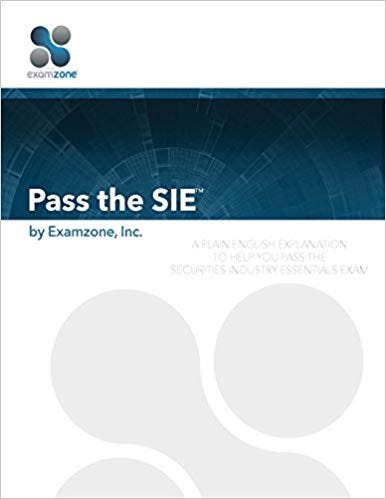
I next read Pass the SIE by Examzone, and it is quite good. I’ve also perused their Pass the 7. They crack jokes and it is a pleasurable experience. Given that these two books were all that were available, I’d strongly recommend Pass the SIE. I do see that there is a For Dummies SIE prep book coming out, but I’ve not read it and can’t speak to it, but that may be a viable way to go coming next year.
How I used Pass the SIE
There are four chapters by subject area, and at the end of each chapter are two quizzes: one in which you underline the correct answer in a sentence out of two options, and the other is multiple choice. At the end of the book there are two 75-question practice exams covering the breadth of the book’s content.
I read through the book cover to cover, marking sections that would need further review if they were new to me or confusing. I completed each chapter’s quizzes immediately after reading the chapter and would see how I did. I would mark questions I got wrong to remember to revisit them, then proceed to the next chapter.
I did not always do well on the chapter quizzes as some information I just didn’t pick up as key. Conceptually you should know how all of these financial instruments work and the tradeoffs of each of them well enough to explain to a friend greener than you are. Then, continue working through the book like this.
After I finished the last chapter (but not the very useful glossary), I took the first full practice exam without reviewing my notes. Predictably, it wasn’t a great score, but I wanted to get an accurate sense of what knowledge I had internalized at that point.
Now it’s time to review. Start at the beginning of the book and look at everything you’ve made notes on. Look at the questions you got wrong in the quizzes, learn the content you missed on them and the first full practice exam. Then visit the glossary for terms you don’t have in your brain, mark it up, and study well. I did this entire process a few times until I could tell where I was consistently failing and redoubled my efforts in those areas.
You may already be a bond champion, and you may have watched enough daytime tv to know everything about annuities, but perhaps the standardized formatting of options trading is opaque. Maybe you can’t remember which SRO or agency or piece of legislation does what. It is hard for me to tell you what may or may not be a tough learn as I’m coming at this from my own educational and experiential background. So make sure you take the practice tests without any help so you know where precisely are your weak points. Seeing your shortcomings will better prepare you the second practice exam, so be thorough and brutal in your self-assessment.
Then, take the second practice exam. Is it better than your first practice exam? It should be! You probably still got questions wrong (I did; don’t feel bad). That’s the content you really need to go back and master, but you should be ready or nearly ready to schedule your official SIE exam.
Conclusion
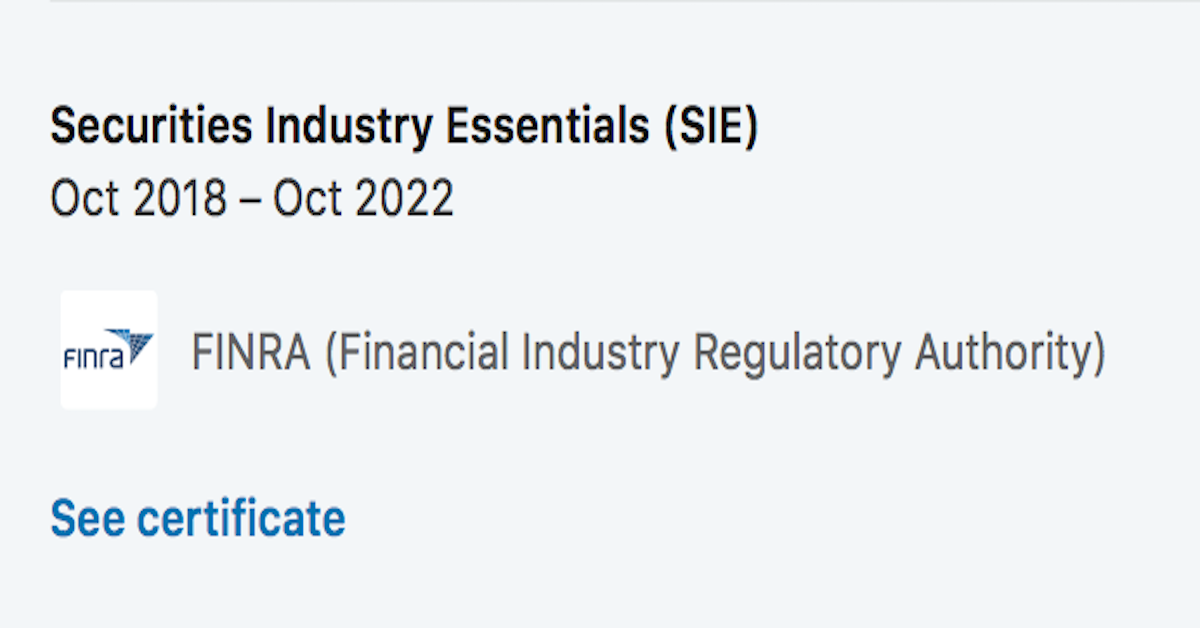
I find the structured learning of credential prep useful for my focus. I needed to learn more about securities, commodities, and derivatives for my work at Nori, and studying for these exams taught me a lot of valuable information. There is something about the deliberate practice of studying difficult subject matter over and over that helps internalize the information more than reading a few articles with no pressure. Whether you want to work in the securities industry or in a related field, or you just want to take responsibility for your financial future, I think the SIE is a beneficial certification. It may even look radiant on your LinkedIn.
In any case, good luck if you decide to pursue the SIE!











 Indian Rupee Exchange Rate


